
 EN
EN
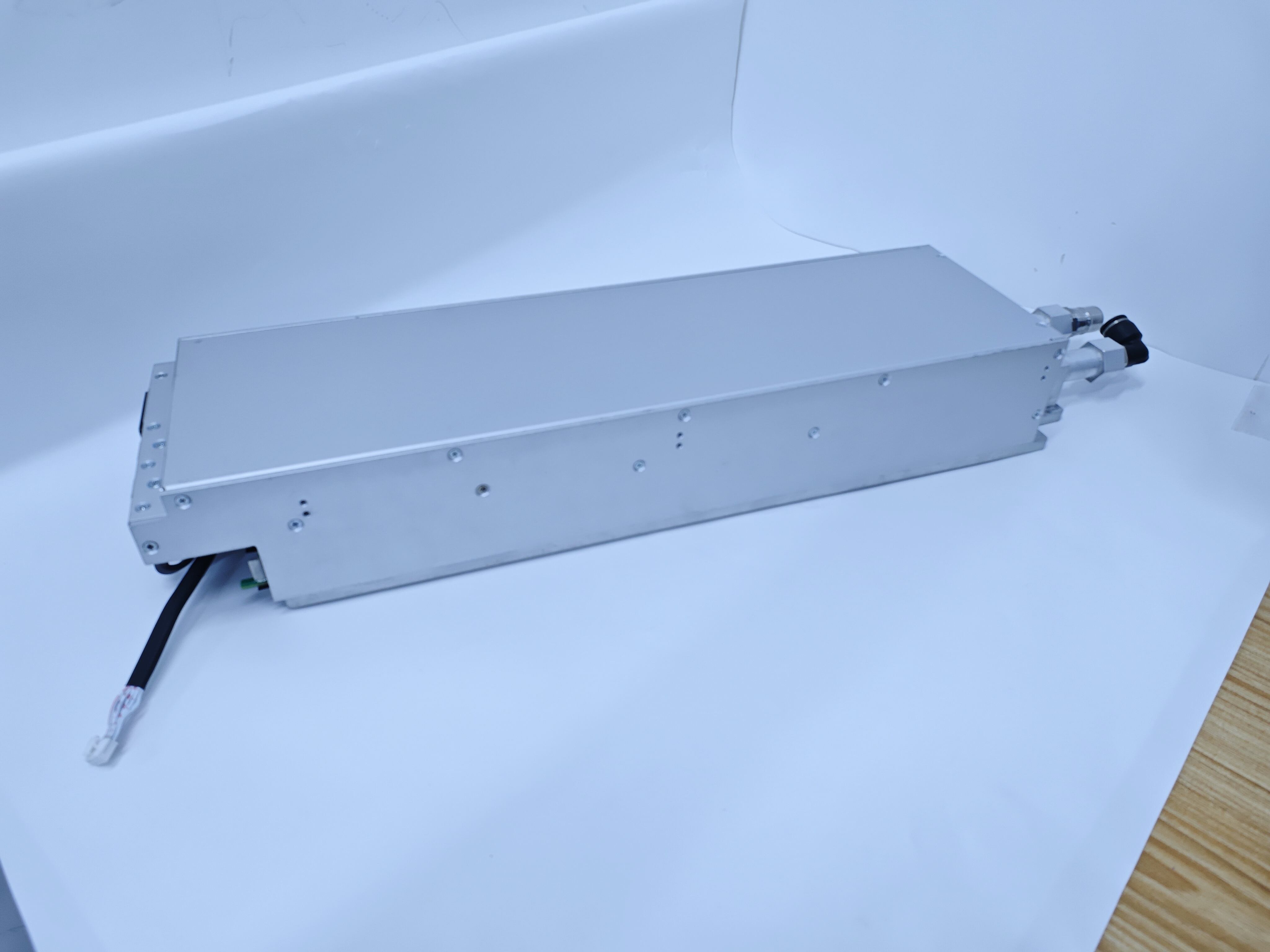
Modern data centers and high-performance computing facilities face an escalating challenge as server power densities continue to climb beyond conventional cooling thresholds. Ultra-high power density racks, often exceeding 30 kW per rack and reaching upwards of 100 kW in specialized deployments, generate heat loads that overwhelm traditional air-based thermal management systems. The infrastructure bottleneck now extends beyond compute hardware to the power delivery layer itself, where power supplies have become significant heat sources requiring dedicated thermal strategies. Prioritizing a liquid cooled power supply architecture represents a fundamental shift in how facilities address the thermal realities of next-generation computing workloads, particularly in AI training clusters, edge supercomputing nodes, and advanced telecommunications infrastructure.
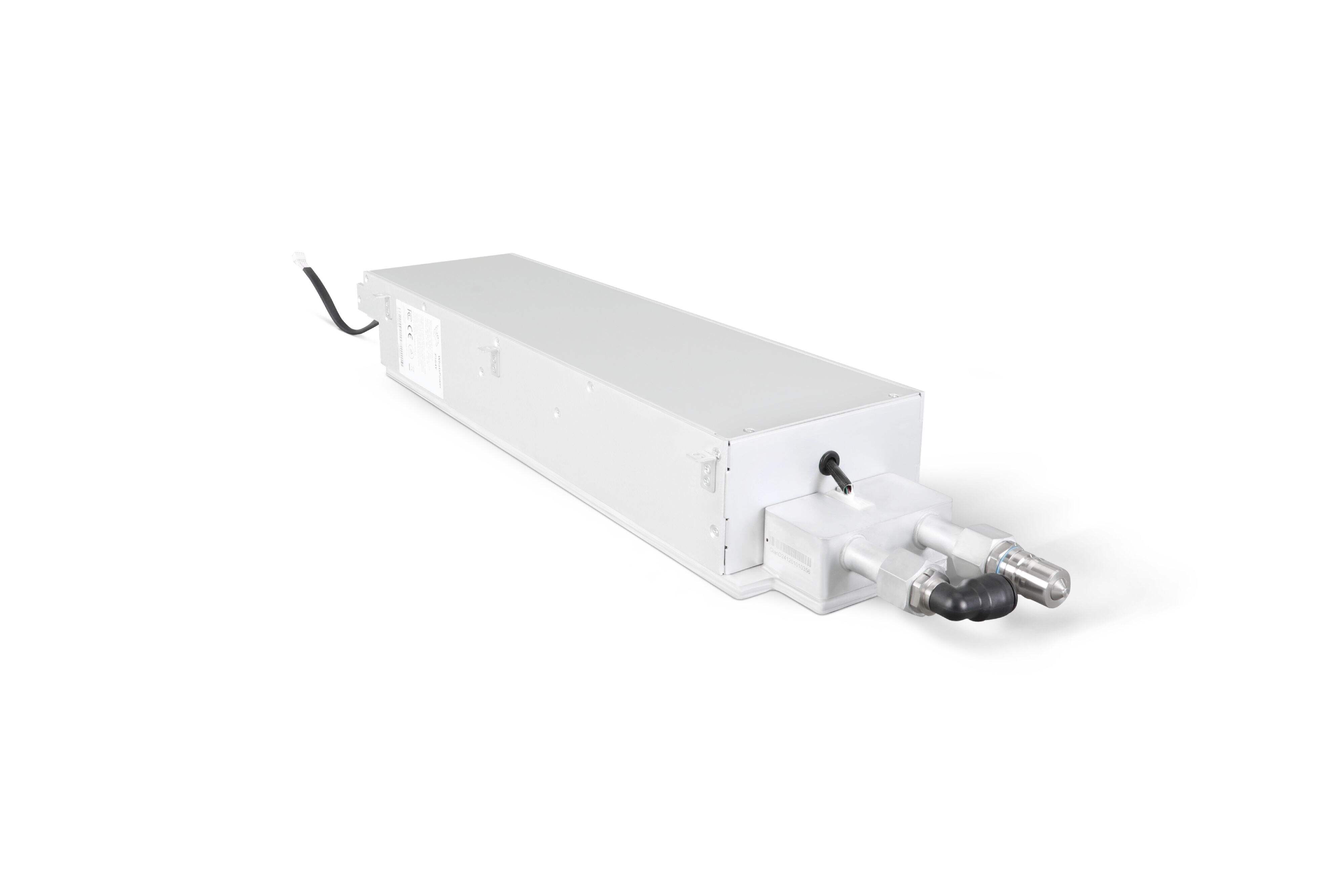
The business case for adopting liquid cooled power supply technology in high-density environments stems from three converging pressures: the physical limitations of air cooling in confined spaces, the operational cost burden of compensating airflow systems, and the growing demand for space efficiency in premium colocation and enterprise facilities. When rack power densities exceed 20 kW, air-cooled power supplies require exponentially greater airflow volumes and face diminishing returns in thermal performance. This creates a cascade of infrastructure penalties including increased fan energy consumption, acoustic pollution, and premature component aging due to elevated operating temperatures. Liquid cooling technology applied directly to power conversion equipment breaks this constraint cycle by removing heat at the source with superior thermal transfer efficiency, enabling facilities to push density boundaries while maintaining reliability standards and controlling operational expenditure.
The Thermal Physics Challenge in Ultra-High Density Power Delivery
Heat Generation Concentration in Power Conversion Stages
Power supplies in high-density racks function as intermediary conversion devices that transform facility-level AC or DC distribution voltage into regulated low-voltage DC suitable for server components. This conversion process inherently generates waste heat through resistive losses in semiconductors, magnetic components, and conductors, with typical efficiency ratings between 92% and 96% for modern designs. In a 10 kW power supply operating at 94% efficiency, approximately 600 watts of thermal energy must be dissipated continuously. When multiple power supplies operate within a single rack enclosure alongside heat-generating compute equipment, the cumulative thermal load creates localized hot spots that compromise component reliability and system stability. Traditional air-cooled power supply designs rely on internal fans and heatsink assemblies to transfer this waste heat into the surrounding air stream, but this approach encounters fundamental limitations as ambient temperatures rise and available airflow decreases in tightly packed configurations.
The power density threshold where air cooling becomes thermally inadequate varies based on rack architecture and facility conditions, but industry experience consistently identifies 25-30 kW per rack as the practical ceiling for conventional forced-air systems. Beyond this point, maintaining junction temperatures within manufacturer specifications requires either excessive airflow velocities that increase acoustic levels and energy consumption, or acceptance of elevated operating temperatures that accelerate component degradation and increase failure rates. A liquid cooled power supply architecture addresses this constraint by implementing direct liquid-to-solid thermal interfaces at critical heat-generating components, typically using cold plates bonded to power semiconductors and magnetic assemblies. This approach leverages the superior thermal capacity and transfer coefficient of liquid coolants compared to air, enabling effective heat removal even in high ambient temperature environments where air cooling would fail to maintain safe operating parameters.
Airflow Disruption and Thermal Coupling Effects
In ultra-high density rack configurations, power supplies compete with server equipment for limited airflow resources within confined enclosures. Air-cooled power supply units positioned at rack entry points disrupt the intended airflow patterns designed for server cooling, creating turbulence and reducing the effective cooling capacity available to downstream components. This phenomenon, known as thermal coupling, becomes particularly problematic when power supplies exhaust heated air directly into the intake zones of adjacent equipment. The resulting temperature stratification within the rack can create conditions where servers at different vertical positions experience dramatically different thermal environments, forcing facility operators to derate overall rack capacity to protect equipment in the least favorable thermal zones. Liquid cooled power supply implementations eliminate this coupling effect by removing heat through dedicated liquid circuits independent of the air cooling infrastructure serving compute equipment, allowing each thermal management system to operate at optimal efficiency without interference.
The strategic separation of power supply cooling from equipment cooling extends beyond immediate thermal benefits to enable more flexible rack architecture design. Without the constraint of maintaining specific airflow corridors through power distribution equipment, facility designers gain freedom to optimize server positioning for cable management, serviceability, and density maximization. This architectural flexibility becomes increasingly valuable as rack power densities approach and exceed 50 kW, where every cubic inch of rack volume represents significant real estate value in premium data center facilities. Furthermore, the elimination of power supply exhaust air from the equipment cooling loop reduces the cooling load on facility-level CRAC units and in-row coolers, translating to measurable energy savings at the infrastructure level that compound over the operational lifetime of the installation.
Economic Drivers for Liquid Cooled Power Supply Adoption
Total Cost of Ownership Analysis in High Density Deployments
The financial justification for prioritizing liquid cooled power supply technology requires comprehensive total cost of ownership analysis that extends beyond initial capital expenditure to encompass operational energy costs, maintenance requirements, and capacity utilization efficiency. While liquid-cooled units typically command a 15-30% premium over equivalent air-cooled models in upfront purchase price, this differential must be evaluated against the infrastructure savings enabled by superior thermal performance. In ultra-high density installations, the ability to deploy additional compute capacity within existing rack footprints directly translates to revenue-generating capability in colocation environments or reduced facility expansion costs in enterprise deployments. A facility operator who can safely deploy 60 kW per rack using liquid cooled power supply technology rather than 30 kW with air-cooled alternatives effectively doubles rack-level revenue potential while avoiding the capital cost of constructing additional floor space.
Operational energy consumption presents another significant economic factor favoring liquid cooling in power delivery systems. Air-cooled power supplies in high-density applications require substantial fan power to achieve necessary airflow rates, with fan energy consumption often representing 3-5% of the power supply's rated capacity. In a 10 kW air-cooled unit, this translates to 300-500 watts of continuous parasitic load that contributes no useful work while generating additional heat that must be removed by facility cooling systems. Liquid cooled power supply designs eliminate or drastically reduce this fan energy penalty by relying on facility-level pumping systems that serve multiple cooling loads with superior overall efficiency. Industry measurements indicate that facility-level liquid cooling distribution typically operates at 0.5-1.0% of served load for pumping energy, representing a 60-80% reduction in cooling-related energy consumption compared to equipment-level forced air approaches. Over a typical five-year operational period, these energy savings can fully offset the initial capital premium while delivering ongoing operational cost reductions.
Space Efficiency and Facility Capacity Optimization
Premium data center real estate in major metropolitan markets commands lease rates that make space efficiency a critical economic driver for infrastructure design decisions. Ultra-high power density racks enabled by liquid cooled power supply technology allow operators to concentrate computing capacity into smaller physical footprints, reducing per-watt space consumption and improving overall facility utilization. A conventional air-cooled facility designed for 10 kW average rack density requires significantly more floor area to house equivalent computing capacity compared to a liquid-cooled facility supporting 40-50 kW per rack. This density differential translates directly to reduced facility construction costs, lower ongoing lease expenses in colocation scenarios, and improved ability to locate facilities in constrained urban environments where available real estate is limited. The economic value of space efficiency compounds in retrofit scenarios where existing facilities face capacity constraints that would otherwise require costly building expansions or relocation to larger premises.
Beyond raw space efficiency, liquid cooled power supply architectures enable more productive use of existing electrical and cooling infrastructure in brownfield upgrades. Many legacy data centers installed with 200-300 watts per square foot power distribution can support significantly higher computing densities when liquid cooling removes the thermal ceiling imposed by air-based systems. Rather than undertaking expensive electrical service upgrades to add capacity, facility operators can deploy liquid cooled power supply systems that allow existing electrical infrastructure to support higher equipment densities by solving the thermal bottleneck. This approach to capacity expansion typically delivers 40-60% lower capital requirements compared to traditional expansion methods while completing projects in compressed timelines that minimize business disruption. The ability to extract additional productive capacity from existing infrastructure investments represents a compelling financial return that often achieves payback periods under 24 months in high-utilization environments.
Performance and Reliability Advantages in Critical Applications
Operating Temperature Management and Component Longevity
Electronic component reliability exhibits exponential sensitivity to operating temperature, with semiconductor failure rates approximately doubling for every 10°C increase in junction temperature according to widely accepted reliability physics models. Power supply designs that maintain lower operating temperatures through effective thermal management deliver measurably longer service lifetimes and reduced failure rates compared to thermally stressed alternatives. A liquid cooled power supply operating with junction temperatures 20-30°C cooler than an equivalent air-cooled unit can achieve 2-4 times longer mean time between failures, translating to reduced maintenance costs, fewer service disruptions, and improved overall system availability. In mission-critical applications where unplanned downtime carries severe financial or operational consequences, the reliability improvement enabled by liquid cooling justifies prioritization even when upfront cost differentials exist.
The temperature control advantage of liquid cooled power supply designs extends to performance stability under varying load conditions and ambient environments. Air-cooled units experience significant temperature excursions as load levels change or as facility cooling systems experience seasonal variations, potentially causing thermal cycling that accelerates fatigue-related failure mechanisms in solder joints and component packaging. Liquid cooling systems maintain more stable operating temperatures across load ranges by virtue of the thermal mass and heat transfer efficiency of the cooling medium, reducing thermal cycling stress and improving long-term reliability. This performance characteristic proves particularly valuable in applications with highly variable workloads such as batch processing environments, where power supply loading may fluctuate between 20% and 100% capacity throughout daily operational cycles. The thermal stability provided by liquid cooling technology protects investment value by extending equipment service life and reducing the frequency of costly replacement cycles.
High Altitude and Harsh Environment Deployment
Geographic and environmental constraints create deployment scenarios where liquid cooled power supply technology transitions from advantageous to essential. High-altitude installations above 1,500 meters experience reduced air density that degrades the thermal performance of forced-air cooling systems, requiring derating of power equipment or implementation of supplementary cooling measures. Telecommunications facilities in mountainous regions, edge computing nodes in elevated locations, and research installations at altitude all encounter this operational constraint. Liquid cooled power supply systems maintain full thermal performance independent of air density, eliminating altitude-related derating penalties and enabling full-capacity operation in geographic locations where air cooling would require oversized equipment or accept reduced capacity. This capability expands the viable deployment envelope for high-performance computing infrastructure into regions previously unsuitable for dense configurations.
Industrial and outdoor environments with elevated ambient temperatures, dust contamination, or corrosive atmospheres present additional challenges that favor liquid cooling approaches. Air-cooled power supplies in these environments require filtered intake air and regular maintenance to prevent contamination buildup that impedes airflow and degrades thermal performance. Dust accumulation on heatsink fins and fan blades progressively reduces cooling effectiveness, forcing more frequent maintenance intervals and increasing lifetime operational costs. Liquid cooled power supply designs with sealed cooling loops and minimal airflow requirements demonstrate superior tolerance to contaminated environments, reducing maintenance requirements and improving operational availability. Facilities in desert climates, heavy industrial zones, or coastal environments with salt-laden air particularly benefit from the environmental isolation that closed-loop liquid cooling provides, achieving reliable operation in conditions that would rapidly degrade air-cooled alternatives.
Integration Considerations and Infrastructure Requirements
Facility-Level Liquid Cooling Infrastructure
Successful deployment of liquid cooled power supply technology requires coordinated facility infrastructure that provides chilled liquid distribution to equipment locations and returns heated liquid to central cooling plants. The infrastructure investment encompasses liquid distribution manifolds, quick-connect couplings for equipment connection, leak detection systems, and redundant pumping arrangements that ensure continuous coolant flow. While this infrastructure represents incremental capital cost compared to air-only facilities, the investment supports multiple cooling loads across power supplies, servers, and networking equipment, providing economy of scale that improves with facility density. Modern liquid cooling implementations typically employ facility-level cooling distribution loops operating at 20-40°C supply temperature with 10-15°C delta T across the load, returning warmer liquid to cooling plants where heat rejection occurs through chillers or direct evaporative cooling systems depending on climate conditions and efficiency targets.
The selection of coolant medium impacts both performance and operational characteristics of liquid cooled power supply implementations. Facilities typically choose between dielectric fluids that allow direct contact with electrical components, or water-glycol mixtures used in sealed cold-plate systems with electrical isolation. Water-based coolants offer superior thermal performance and lower cost but require careful attention to conductivity management and leak consequences. Dielectric fluids provide inherent electrical safety but operate at reduced thermal performance and higher fluid costs. For power supply applications where electrical isolation can be maintained through cold-plate interfaces, water-glycol mixtures at 30-40% concentration represent the optimal balance of thermal performance, freeze protection, and cost efficiency. Facility designers must coordinate coolant selection across all liquid-cooled equipment to avoid the operational complexity of supporting multiple fluid types, making early architecture decisions critical to long-term success.
Service and Maintenance Model Adaptations
The maintenance requirements for liquid cooled power supply installations differ from traditional air-cooled approaches, necessitating training investments and procedural adaptations for facility operations teams. Routine maintenance includes coolant quality monitoring to ensure appropriate conductivity, pH, and inhibitor concentration levels that protect system components from corrosion. Quick-disconnect couplings require periodic inspection for seal integrity and proper function, while leak detection systems need functional verification to ensure prompt identification of any cooling system breaches. These maintenance activities represent incremental operational tasks compared to air-cooled systems, but the overall maintenance burden typically decreases due to elimination of fan failures and reduced thermal stress on power supply internal components. Industry experience suggests that mature liquid cooling operations achieve 30-40% lower maintenance intervention rates compared to equivalent air-cooled deployments after personnel training and procedural optimization periods.
Hot-swap serviceability for liquid cooled power supply units requires careful design attention to ensure field technicians can safely disconnect and replace units without draining facility cooling loops or risking coolant spills. Modern implementations employ self-sealing quick-disconnect couplings that automatically close when equipment is removed, containing residual coolant within connection points and preventing environmental contamination. Proper service procedures include isolation of the cooling loop segment serving the target equipment, depressurization of trapped coolant, and verification of coupling seal function before disconnection. These procedural requirements add modest time overhead to service events compared to simple air-cooled unit replacement, but the reduced frequency of service interventions due to improved reliability typically results in lower overall maintenance labor consumption. Facilities prioritizing liquid cooled power supply technology should invest in comprehensive technician training and maintain spare coupling assemblies to minimize service event duration and ensure consistent execution quality.
Future-Proofing Infrastructure Investment
Scaling Headroom for Emerging Workload Requirements
The computational intensity of emerging workloads in artificial intelligence, machine learning, and advanced analytics continues to drive server power consumption upward, with next-generation GPU-accelerated systems approaching 1-2 kW per processor socket and 10-15 kW per 2U server chassis. Traditional air-cooled power delivery infrastructure installed for current-generation equipment faces obsolescence as these next-generation systems deploy, forcing costly retrofit projects or capacity constraints that limit competitive positioning. Facilities that prioritize liquid cooled power supply architecture today establish thermal headroom that accommodates future equipment generations without fundamental infrastructure replacement. The superior cooling capacity of liquid-based systems provides scaling headroom that extends the productive service life of facility infrastructure investments, protecting capital value and avoiding disruptive upgrade projects during productive operational periods. This future-proofing characteristic becomes increasingly valuable as equipment refresh cycles accelerate and performance density trajectories steepen across multiple technology domains.
The modularity inherent in modern liquid cooled power supply designs enables incremental capacity expansion that aligns infrastructure investment timing with actual demand growth. Facilities can deploy initial cooling infrastructure sized for current requirements while designing distribution systems with capacity for future expansion, adding cooling plant capacity and distribution branches as workload demands justify additional investment. This approach contrasts with air-cooled infrastructure where fundamental architectural constraints often necessitate complete redesigns when density requirements exceed original planning assumptions. The flexibility to scale liquid cooling infrastructure incrementally reduces upfront capital requirements while ensuring the technical capability to support future density levels, optimizing the financial profile of infrastructure investment across multi-year planning horizons. Organizations prioritizing liquid cooled power supply technology position themselves to capture competitive advantages from emerging high-performance computing capabilities without infrastructure constraints limiting deployment speed or scale.
Alignment with Sustainability and Efficiency Mandates
Corporate sustainability commitments and regulatory efficiency mandates increasingly influence data center infrastructure decisions, creating additional drivers for liquid cooled power supply adoption. The superior energy efficiency of liquid cooling systems directly supports reduced power usage effectiveness metrics that have become key performance indicators for facility operations. By eliminating parasitic fan loads and enabling higher temperature cooling water that improves chiller efficiency or enables free cooling operation for extended annual hours, liquid cooled power supply implementations contribute measurably to facility-level energy efficiency improvements. Organizations with aggressive carbon reduction targets find liquid cooling technologies essential enablers for achieving efficiency goals while maintaining the computing capacity necessary for business operations. The alignment between thermal performance requirements and sustainability objectives creates strategic value beyond immediate operational benefits.
The waste heat recovered from liquid cooled power supply systems represents a potential resource for building heating, process heat applications, or district energy integration in facilities with appropriate thermal loads. Unlike the low-grade waste heat exhausted by air-cooled systems at temperatures barely above ambient, liquid cooling loops can deliver waste heat at 40-50°C that proves useful for space heating, domestic hot water, or process applications. Forward-thinking facilities are implementing heat recovery systems that capture this waste energy and redirect it to productive uses, further improving overall energy efficiency and reducing carbon footprint. While heat recovery adds system complexity and requires suitable thermal loads in proximity to data center facilities, the potential to transform waste heat into useful energy represents an additional value stream that enhances the economic case for liquid cooled power supply prioritization in appropriate deployment contexts.
FAQ
What power density threshold makes liquid cooled power supply necessary rather than optional?
The transition point where liquid cooled power supply becomes necessary rather than merely advantageous typically occurs between 25-35 kW per rack, depending on facility ambient conditions and airflow architecture. Below this threshold, optimized air cooling with sufficient airflow provisioning can maintain adequate thermal performance, though liquid cooling may still offer economic benefits through reduced energy consumption and improved reliability. Above 35 kW per rack, air cooling approaches encounter physical limitations where required airflow velocities become impractical or operating temperatures exceed acceptable ranges even with maximum air provisioning. Facilities planning for 40 kW and higher rack densities should prioritize liquid cooled power supply from initial design stages rather than attempting air-cooled approaches that will require costly retrofits when thermal limits are reached.
How does liquid cooled power supply reliability compare to mature air-cooled designs?
Liquid cooled power supply reliability exceeds air-cooled alternatives when properly implemented, primarily due to lower operating temperatures that reduce thermal stress on semiconductor components and eliminate mechanical fan failures that represent common failure modes in air-cooled units. Industry field data indicates mean time between failures improvements of 2-3 times for liquid-cooled designs compared to air-cooled equivalents in high-density applications. The key qualifier is proper implementation including coolant quality maintenance, leak prevention through quality fittings, and adequate redundancy in cooling distribution systems. Facilities that maintain appropriate operational discipline around liquid cooling infrastructure consistently achieve superior reliability outcomes compared to thermally stressed air-cooled deployments.
Can existing data centers retrofit liquid cooled power supply without major construction?
Retrofit feasibility for liquid cooled power supply in existing facilities depends on available infrastructure space for cooling distribution equipment and the geometric compatibility of liquid lines with existing cable routing pathways. Many facilities successfully implement liquid cooling retrofits by installing modular cooling distribution units that connect to existing chilled water plants or add supplementary cooling capacity through self-contained systems. The retrofit process requires coordination of liquid distribution manifolds, typically routed overhead or under raised floors alongside power distribution, and installation of quick-connect infrastructure at rack locations. While retrofit projects involve more complexity than new construction implementations, they remain technically and economically viable for most facilities, particularly when compared to the alternative costs of building expansion or facility relocation to gain additional capacity.
What maintenance skill requirements does liquid cooled power supply add for operations teams?
Liquid cooled power supply maintenance requires facility operations personnel to develop competencies in coolant chemistry management, leak detection and response procedures, and proper service techniques for quick-disconnect couplings. Most organizations achieve operational proficiency through manufacturer-provided training programs spanning 2-3 days of classroom and hands-on instruction, supplemented by supervised practice during initial deployment phases. The incremental skill requirements prove manageable for teams with existing data center mechanical systems experience, as many concepts transfer from building HVAC and chilled water systems. Organizations without internal expertise can alternatively contract with specialized service providers for liquid cooling maintenance during initial operational periods while developing internal capabilities, or maintain ongoing service contracts if operational scale does not justify dedicated internal expertise.
Table of Contents
- The Thermal Physics Challenge in Ultra-High Density Power Delivery
- Economic Drivers for Liquid Cooled Power Supply Adoption
- Performance and Reliability Advantages in Critical Applications
- Integration Considerations and Infrastructure Requirements
- Future-Proofing Infrastructure Investment
-
FAQ
- What power density threshold makes liquid cooled power supply necessary rather than optional?
- How does liquid cooled power supply reliability compare to mature air-cooled designs?
- Can existing data centers retrofit liquid cooled power supply without major construction?
- What maintenance skill requirements does liquid cooled power supply add for operations teams?