
 EN
EN
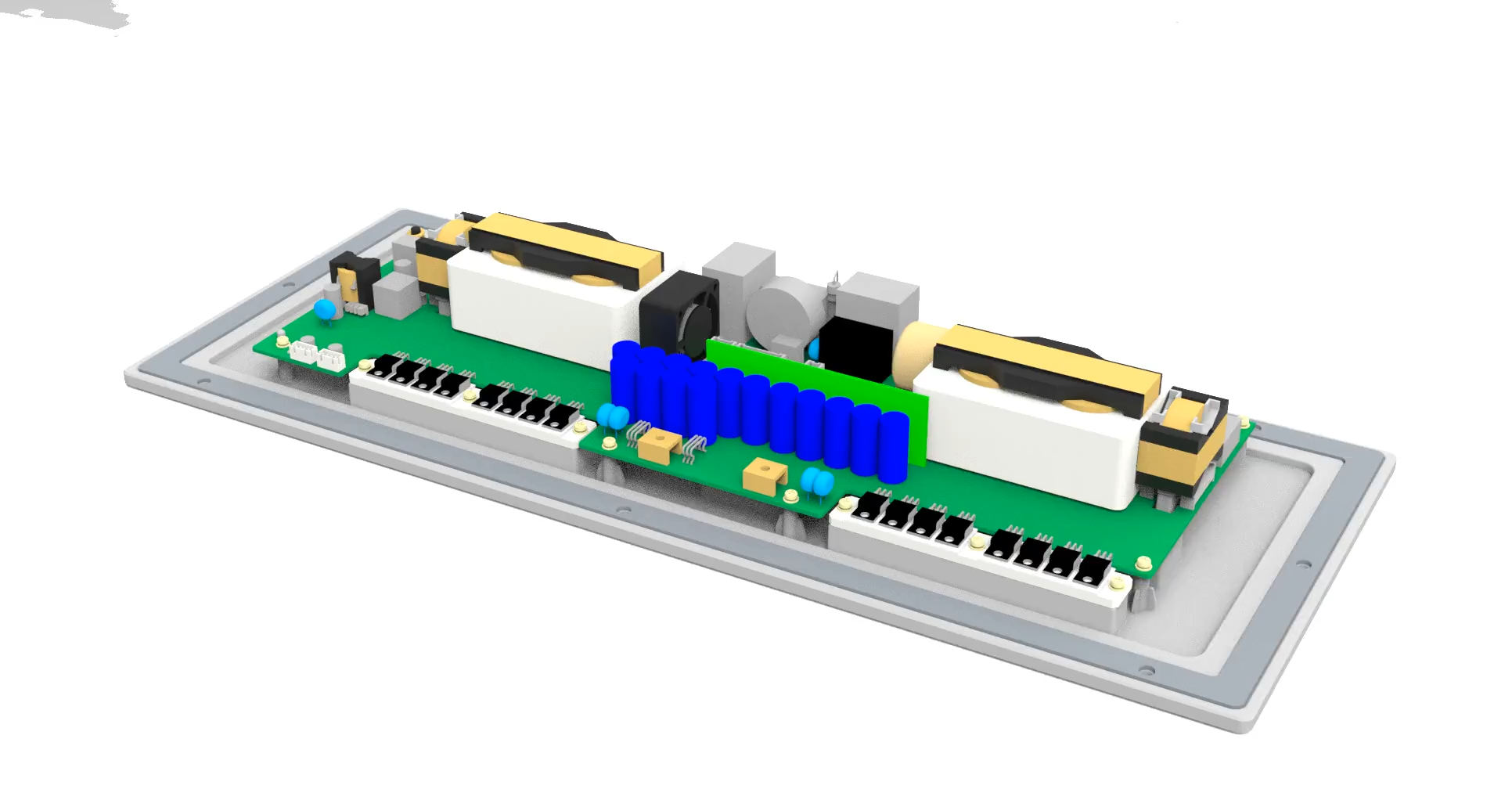
As renewable energy sources like solar and wind continue to expand their share of the global electricity mix, the ability to store and dispatch that energy reliably has become a defining challenge for modern grid operators. At the heart of every grid-scale energy storage installation sits a critical piece of infrastructure that determines whether stored energy can actually be used: the power conversion system. Without it, the chemical or mechanical energy held inside a battery bank or other storage medium simply cannot interact with the alternating current grid that powers homes, factories, and cities.
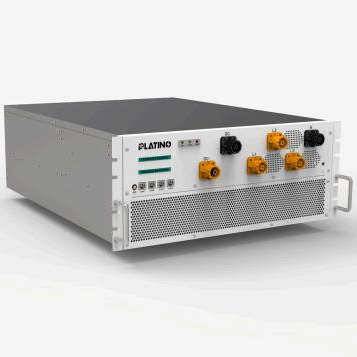
Understanding why a power conversion system is essential requires looking beyond the hardware itself and examining the fundamental role it plays in bridging two incompatible electrical worlds. Grid-scale energy storage projects represent investments of tens of millions of dollars, and the performance, safety, and economic return of those projects depend directly on how well the power conversion system manages energy flow, responds to grid signals, and protects the entire installation from electrical stress. This article explores the core reasons why no serious grid-scale storage project can function without a capable, well-engineered power conversion system.
The Fundamental Role of a Power Conversion System in Energy Storage
Bridging DC Storage and AC Grid Infrastructure
Battery energy storage systems store electricity in direct current form. The grid, however, operates on alternating current at tightly regulated voltage and frequency levels. A power conversion system performs the essential translation between these two electrical domains, converting DC from the battery bank into grid-compatible AC during discharge, and reversing that process during charging. This bidirectional capability is not a convenience feature — it is the fundamental mechanism that makes grid-scale storage physically possible.
Without a power conversion system handling this conversion, the stored energy in a battery array would have no pathway onto the grid. The conversion process must also be highly efficient, because every percentage point of energy lost during conversion directly reduces the economic return of the storage asset. Modern power conversion systems achieve round-trip conversion efficiencies above 97%, which is critical when a project is cycling hundreds of megawatt-hours of energy daily.
The power conversion system must also handle the full range of operating conditions that a grid-scale installation encounters, including partial load operation, rapid ramp events, and temperature extremes. A system that performs well only under ideal conditions is not suitable for the demanding environment of utility-scale storage deployment.
Enabling Bidirectional Energy Flow
One of the defining characteristics of a power conversion system used in energy storage is its ability to operate in both charging and discharging modes seamlessly. During periods of low grid demand or high renewable generation, the power conversion system draws AC power from the grid, converts it to DC, and directs it into the battery system. During peak demand or grid stress events, the process reverses instantly, pushing stored DC energy back onto the grid as AC power.
This bidirectional operation must be fast, precise, and controllable. Grid operators and energy storage project owners rely on the power conversion system to respond to dispatch commands within milliseconds, enabling services like frequency regulation, voltage support, and peak shaving. The speed and accuracy of that response is entirely determined by the quality and design of the power conversion system.
In grid-scale applications, the power conversion system is often required to transition between charging and discharging modes multiple times per day, sometimes within seconds. This places significant demands on the power electronics, control algorithms, and thermal management systems embedded within the unit.
Why Grid Stability Depends on Power Conversion System Performance
Frequency Regulation and Grid Support Services
Modern electricity grids require constant balancing between generation and consumption. When that balance shifts even slightly, grid frequency deviates from its nominal value, which can trigger cascading failures if left uncorrected. A power conversion system equipped with advanced control capabilities can detect frequency deviations and respond by injecting or absorbing active power within milliseconds, providing a stabilizing effect that traditional generation assets cannot match in speed.
This frequency response capability is one of the primary reasons grid operators value grid-scale energy storage, and it is entirely dependent on the power conversion system's control architecture. The power conversion system must continuously monitor grid conditions, execute control algorithms, and adjust its output in real time. A slow or imprecise power conversion system undermines the entire value proposition of the storage asset.
Beyond frequency regulation, a power conversion system can also provide reactive power support, helping to maintain voltage levels across the grid. This capability is particularly valuable in areas with high penetrations of renewable generation, where voltage fluctuations are more frequent and harder to manage with conventional equipment.
Islanding Detection and Grid Protection
Grid safety requires that energy storage systems disconnect from the grid under certain fault conditions, particularly during islanding events where a section of the grid becomes electrically isolated from the main network. A power conversion system must include robust islanding detection algorithms that identify these conditions quickly and initiate a safe disconnection before damage occurs to equipment or personnel.
The power conversion system also serves as the primary interface for grid protection functions, including over-voltage, under-voltage, over-frequency, and under-frequency protection. These protective functions are not optional — they are required by grid interconnection standards in virtually every market where grid-scale storage is deployed. A power conversion system that does not meet these standards cannot legally connect to the grid.
In addition to protecting the grid, the power conversion system must protect the battery system itself from harmful operating conditions. Overcharge, deep discharge, and excessive charge or discharge rates can all degrade battery performance and shorten system life. The power conversion system enforces the operating boundaries that keep the battery within its safe operating envelope.
Economic Value Created by a High-Performance Power Conversion System
Maximizing Revenue from Multiple Grid Services
Grid-scale energy storage projects generate revenue by providing services to grid operators, utilities, and energy markets. The range of services a storage project can offer — and therefore the revenue it can earn — is directly constrained by the capabilities of its power conversion system. A power conversion system with fast response times, high efficiency, and flexible control modes can participate in frequency regulation markets, capacity markets, energy arbitrage, and ancillary services simultaneously.
Projects equipped with a capable power conversion system can stack multiple revenue streams, which is essential for achieving acceptable returns on the large capital investments that grid-scale storage requires. A power conversion system that limits the project to a single revenue stream, or that cannot respond quickly enough to qualify for high-value ancillary services, directly reduces the project's financial performance over its operating life.
The efficiency of the power conversion system also has a direct impact on operating economics. Every kilowatt-hour lost to conversion inefficiency is a kilowatt-hour that cannot be sold. Over the course of thousands of operating cycles across a multi-decade project life, even small improvements in power conversion system efficiency translate into significant revenue differences.
Reducing Lifecycle Costs Through Modular Architecture
Modern grid-scale storage projects increasingly favor modular power conversion system designs that allow individual units to be serviced, upgraded, or replaced without taking the entire installation offline. This modularity reduces maintenance downtime, lowers the cost of repairs, and allows the system to scale as project requirements evolve. A modular power conversion system architecture also provides redundancy, so that the failure of a single unit does not disable the entire storage asset.
The ability to upgrade the power conversion system's firmware and control software remotely is another important economic consideration. Grid interconnection requirements and market rules evolve over time, and a power conversion system that can be updated to meet new requirements without hardware replacement protects the project owner's investment and extends the useful life of the installation.
When evaluating the total cost of ownership for a grid-scale storage project, the power conversion system must be assessed not just on its purchase price but on its efficiency, reliability, serviceability, and adaptability over a project life that may span twenty years or more.
Technical Requirements That Make a Power Conversion System Indispensable
Advanced Control and Communication Capabilities
A power conversion system in a grid-scale application does not operate in isolation. It must communicate with the battery management system, the energy management system, the grid operator's SCADA platform, and potentially multiple market systems simultaneously. This requires the power conversion system to support standard industrial communication protocols and to execute complex control logic that coordinates all of these interactions in real time.
The control architecture of a power conversion system determines how precisely it can follow dispatch instructions, how quickly it can respond to grid events, and how intelligently it can optimize its own operation to maximize efficiency and battery life. These control capabilities are embedded in the power conversion system's firmware and represent years of engineering development that cannot be replicated by simply assembling power electronics components.
As grid-scale storage projects become more sophisticated, the demands placed on the power conversion system's control capabilities continue to grow. Features like virtual inertia emulation, synthetic droop control, and adaptive charging algorithms are increasingly expected by grid operators and project developers, and they all depend on the intelligence built into the power conversion system.
Thermal Management and Long-Term Reliability
Power electronics generate heat during operation, and managing that heat is critical to the long-term reliability of a power conversion system. In grid-scale applications, the power conversion system may operate continuously for extended periods, cycling through thousands of charge and discharge events over its lifetime. Inadequate thermal management leads to accelerated component degradation, increased failure rates, and ultimately higher lifecycle costs.
A well-designed power conversion system incorporates thermal management systems that maintain component temperatures within safe operating ranges under all expected operating conditions, including high ambient temperatures and maximum load operation. The reliability of the power conversion system directly affects the availability of the entire storage asset, which in turn affects the project's ability to fulfill its contractual obligations to grid operators and offtakers.
Reliability is not just a technical metric — it has direct financial consequences. A power conversion system that experiences frequent failures or requires extended maintenance periods reduces the project's revenue-generating availability and may trigger penalty clauses in grid service contracts. Investing in a high-reliability power conversion system is therefore a sound financial decision as well as a technical one.
FAQ
What does a power conversion system actually do in a battery storage project?
A power conversion system converts direct current stored in the battery bank into alternating current that can be fed onto the grid, and reverses that process during charging. It also manages the rate of energy flow, enforces safe operating limits for the battery, and provides grid support functions like frequency regulation and voltage control. Without a power conversion system, the stored energy in a battery system has no usable pathway to or from the grid.
Why can't a standard inverter replace a dedicated power conversion system in grid-scale storage?
Standard inverters are designed for unidirectional energy flow, typically from a solar array to the grid. A power conversion system for energy storage must operate bidirectionally, managing both charging and discharging with equal precision. It also requires more sophisticated control algorithms, battery protection logic, and grid support capabilities than a standard inverter provides. Using an inverter not designed for storage applications in a grid-scale project would result in poor performance, safety risks, and likely non-compliance with grid interconnection requirements.
How does the power conversion system affect battery lifespan?
The power conversion system controls the rate and profile of charging and discharging, which are among the most significant factors affecting battery degradation. A power conversion system with intelligent charging algorithms can minimize stress on the battery cells by avoiding extreme states of charge, limiting peak current rates, and adapting the charge profile to battery temperature and condition. Poor power conversion system control, by contrast, can accelerate capacity fade and reduce the effective life of the battery system by years.
What should project developers prioritize when selecting a power conversion system for grid-scale storage?
Project developers should evaluate the power conversion system on efficiency across its full operating range, response speed for grid services, communication protocol compatibility, modularity for maintenance and scaling, thermal management quality, and the vendor's track record in grid-scale deployments. Compliance with relevant grid interconnection standards is non-negotiable. The power conversion system's control flexibility and software upgrade capability are also important for ensuring the project can adapt to evolving grid requirements over its operating life.
Table of Contents
- The Fundamental Role of a Power Conversion System in Energy Storage
- Why Grid Stability Depends on Power Conversion System Performance
- Economic Value Created by a High-Performance Power Conversion System
- Technical Requirements That Make a Power Conversion System Indispensable
-
FAQ
- What does a power conversion system actually do in a battery storage project?
- Why can't a standard inverter replace a dedicated power conversion system in grid-scale storage?
- How does the power conversion system affect battery lifespan?
- What should project developers prioritize when selecting a power conversion system for grid-scale storage?